Go for it?
Sunday 16 February 2025
FlyingOwning a plane
The financial analysis we did back in October made clear what we already suspected: owning a plane isn’t cheap. But having the numbers on your screen in a spreadsheet was confronting and made us wonder if we were willing to put that much money into our hobby.
Some time has passed and we have had some time to think things over. The dark and cold months are behind us, and the good weather is getting closer. At some point we have to stop thinking about it and decide which plane we are going to fly this year. So, let’s have dinner, discuss and see if we can come to a conclusion.

Decisions, decisions, decisions…
When we started talking seriously about buying a plane together, it became clear that understanding each other’s point of view mattered more than convincing anyone.
There’s this great gap between what your heart wants and your brain thinks. And that’s exactly what was happening here. All three of us are passionate about flying, but money spent on this hobby means that it can’t be spent on other things. This brings us to the main question: can we reduce the costs?
During dinner we shared our wishes and requirements. And while talking and listening to each other we realized that we were making quite some decisions.
Engine and fuel type
While creating the spreadsheet we have already concluded that, based on our plans, there’s no financial benefit to buying a plane with a diesel engine. Since Bas is going to maintain the plane, we also had to consider what he is allowed to work on. Based on this the choice became obvious: petrol it is.
No reserves for engine overhaul
The spreadsheet clearly shows the financial impact of saving for an engine (and propeller) overhaul. The hourly rates are calculated by adding up fuel per hour, maintenance per hour and the reserves that we need to build up to overhaul the engine when it’s reached its maximum lifetime.
But what if instead of saving for such an overhaul based on flight time, each of us would reserve money themselves? The formula was changed and here we go:
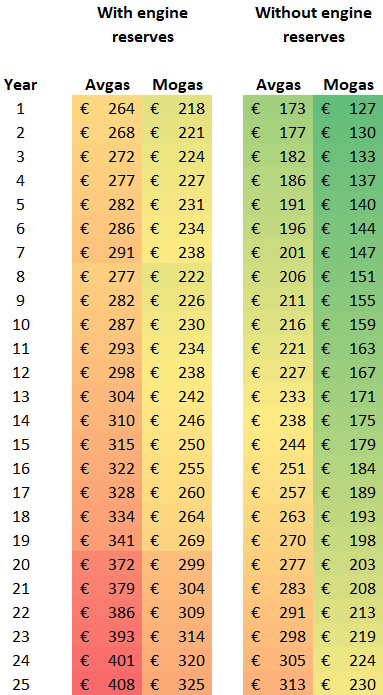
The numbers look a lot better. However, we all need to understand and accept the risk of this step. Worst case, one or more of the participants did not save for the overhaul and they are lacking the funds to pay for it when it is required.
Since we may sell the plane before an overhaul would be required, skipping building up reserves for an overhaul is a valid option. While discussing, we all felt comfortable with such a choice and decided to go for a lower hourly rate and accept the risk.
Hangar
We already found out that renting hangar space is expensive and there are not a lot of options at our homebase. Since we are looking to reduce costs, the obvious option is to store the plane in the flying club’s hangar and accept the risk of damage caused by moving planes around.
Although this is not our preferred option, it makes sense. So here we go, another decision.
Maintenance
Bas, being a licensed mechanic, would like to take care of maintenance himself. Although he probably can’t do all the maintenance tasks on his own, most regular maintenance activities will probably not be an issue. This will certainly reduce costs; labor is expensive and in this case for free.
As we don’t know yet which plane we will end up with, we can’t put a figure to this. But knowing that our current maintenance figures are probably too high, this is a great improvement.
Final results
With all these decisions the financials changed a lot. Here’s how it works out for my personal situation:
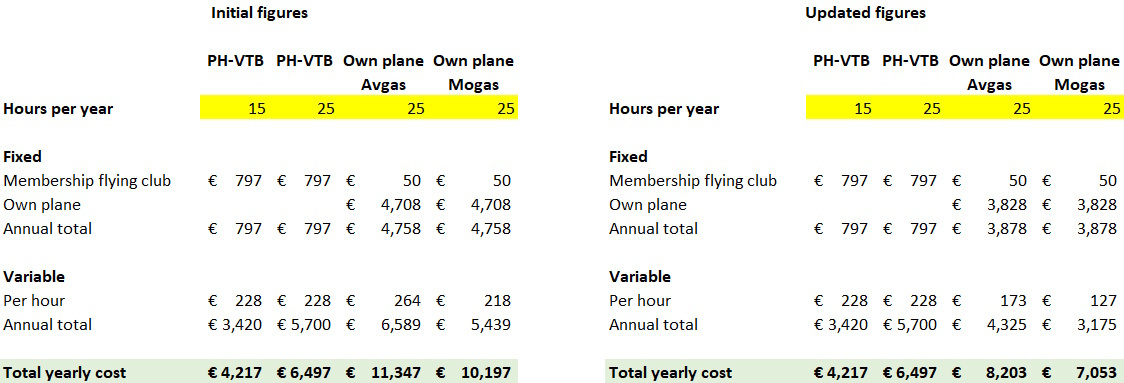
And these numbers changed the mood of the group; we all felt that, if we stay within these boundaries, we would be happy to start discussing which plane to buy.
Let’s talk planes
We have been monitoring websites where planes are put up for sale. This helped us to identify potential make and models and get an understanding of what is available within our budget.
While we started our journey last year, KLM Flight Academy put their Socata fleet up for sale. Including these beauties:
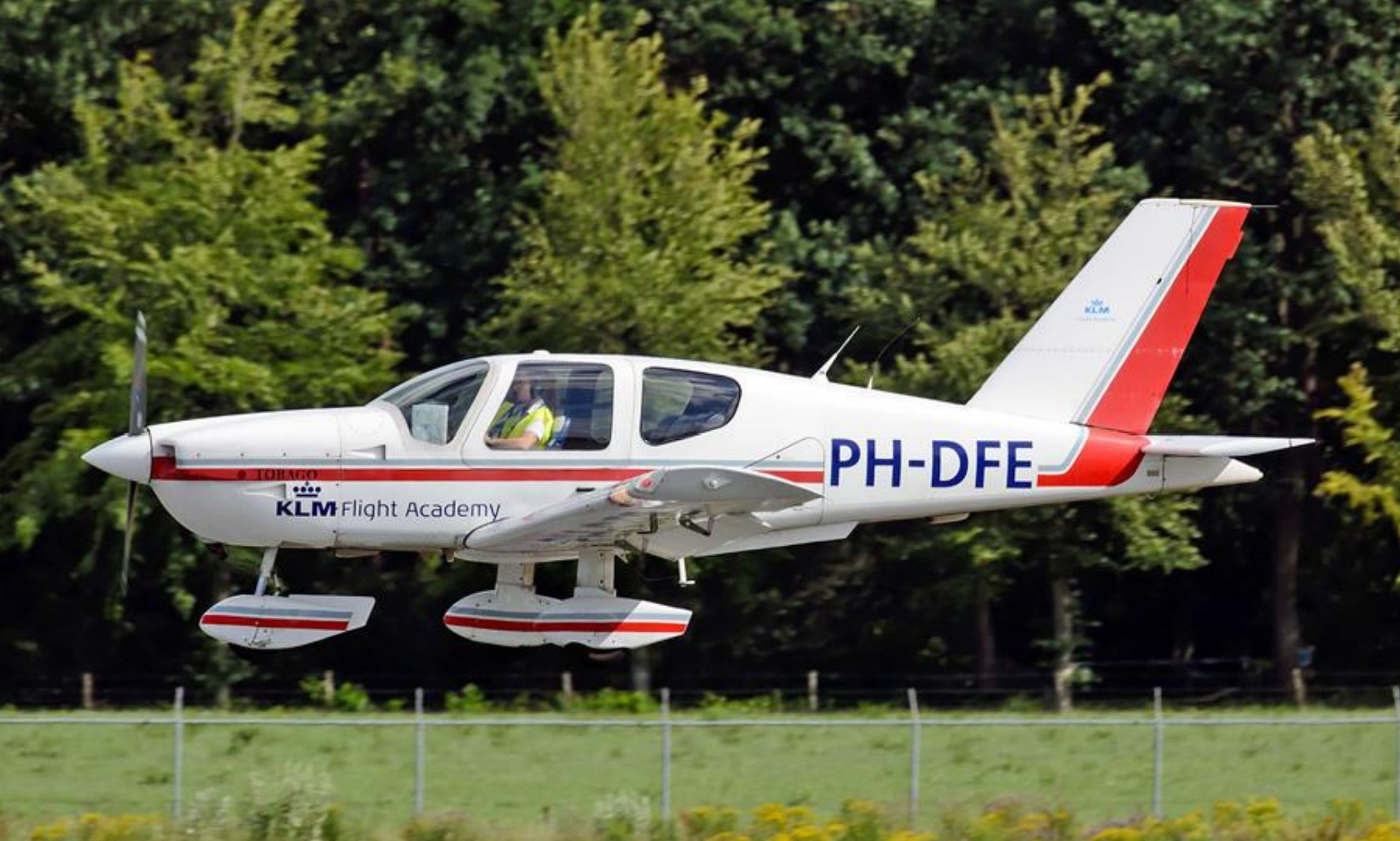
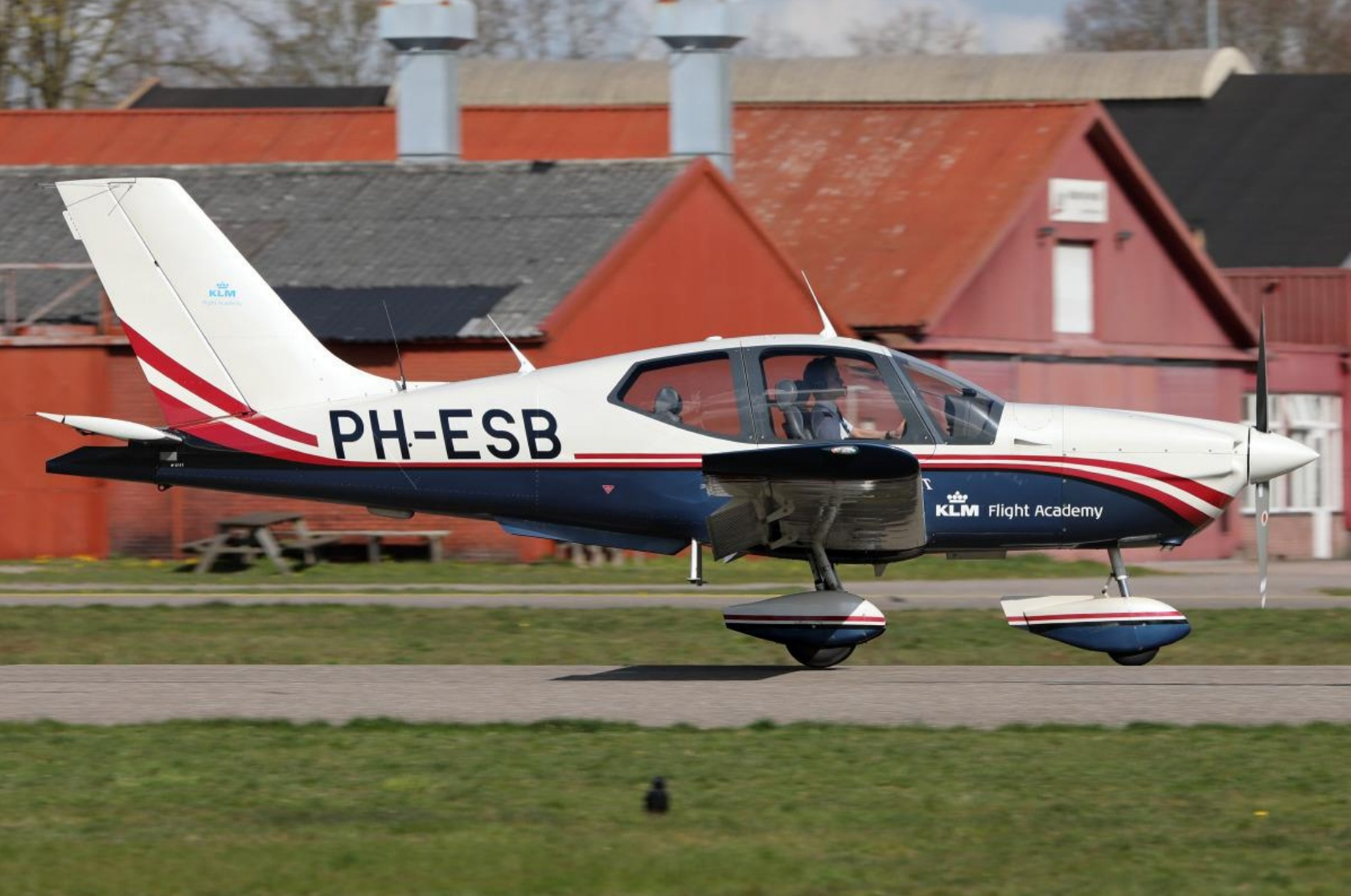
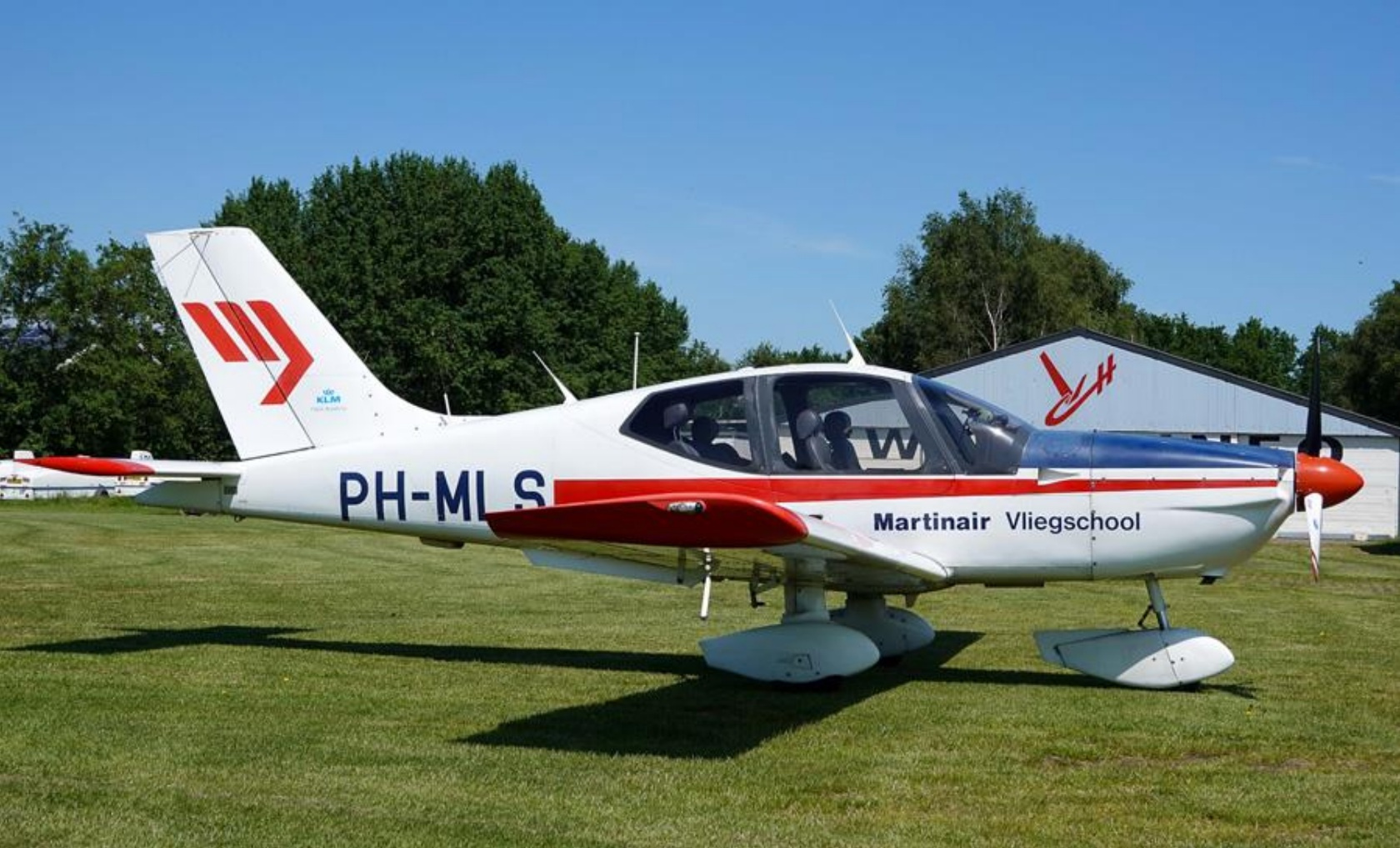
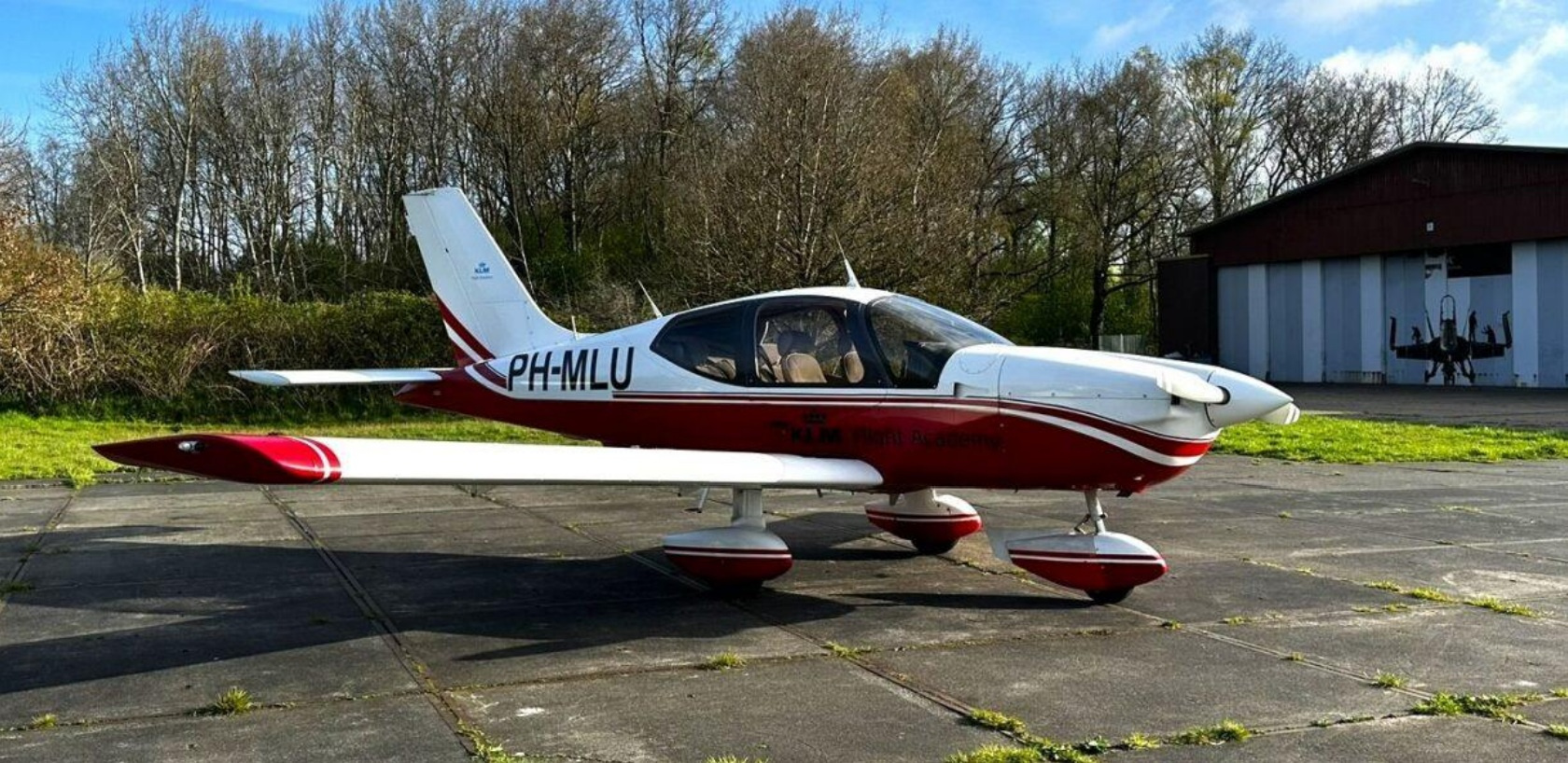
In our initial discussions, we considered buying one of their TB-10’s and used this type of aircraft during the setup of our finance spreadsheet. During the development of the sheet, it became clear that the TB-10 might not be the best option for us. This type is not manufactured anymore and maintenance seems expensive. Next to that, it is not possible to use mogas in the TB-10 and it’s probably impossible to convert it to be run on mogas and finally, it is questionable if it can be run on unleaded avgas. This type is end of life – you fly it as is and as long (which can be decades) as you can.
The TB-20 is also not produced anymore, but there are many more upgrades available for it. The TB-20 has a retractable gear, making it go faster and improve fuel efficiency. But this feature also makes this a more complex aircraft to fly and more expensive to maintain. We concluded that we should stay away from complex aircraft.
Along the way, we listed lots of wishes and requirements, limiting the number of options that we could choose from and excluding these:
- Socata TB-10 – because of its performance, running costs and maintenance costs.
- Socata TB-20 – because of the retractable gear.
- Diamond DA40 – because of its non-steerable nose wheel.
- Piper PA-28 – because of only having a single door on the passenger side.
- Cessna 172 - because one of us (I will not mention her name) doesn’t like the looks of it.
- Cirrus SR-20 – because of … well that list is too long to put here.
What’s for dessert?
Gea cooked us a nice dinner and by the time we got to dessert, we discussed make and models that we were not going to buy. Then I mentioned my experience flying a Robin DR400 back in 2007 and loving the view and the handling of the plane. When I got involved with the flying clubs’ fleet, we also looked at the performance and weight and balance of this type of plane. Why not go for a Robin?
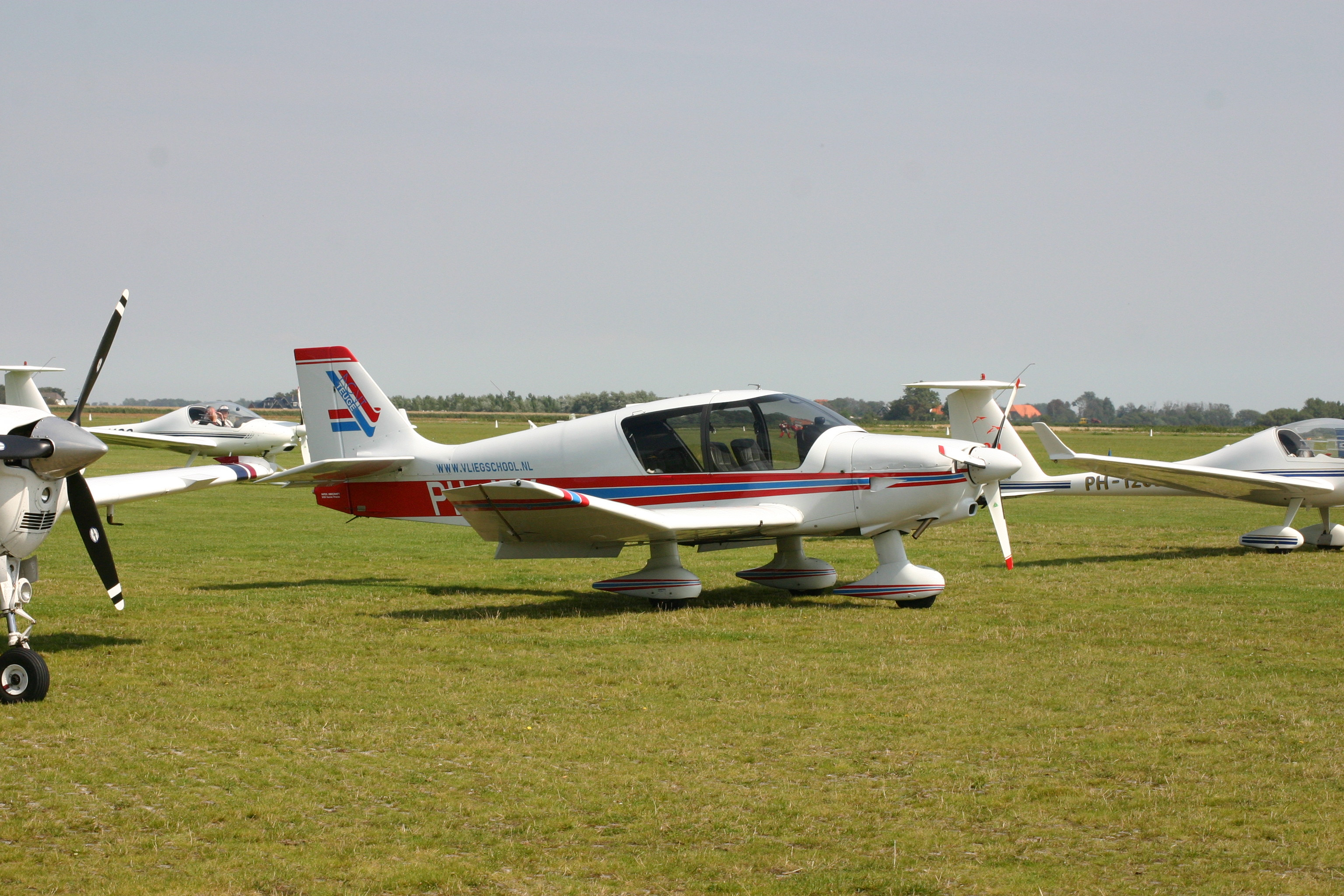
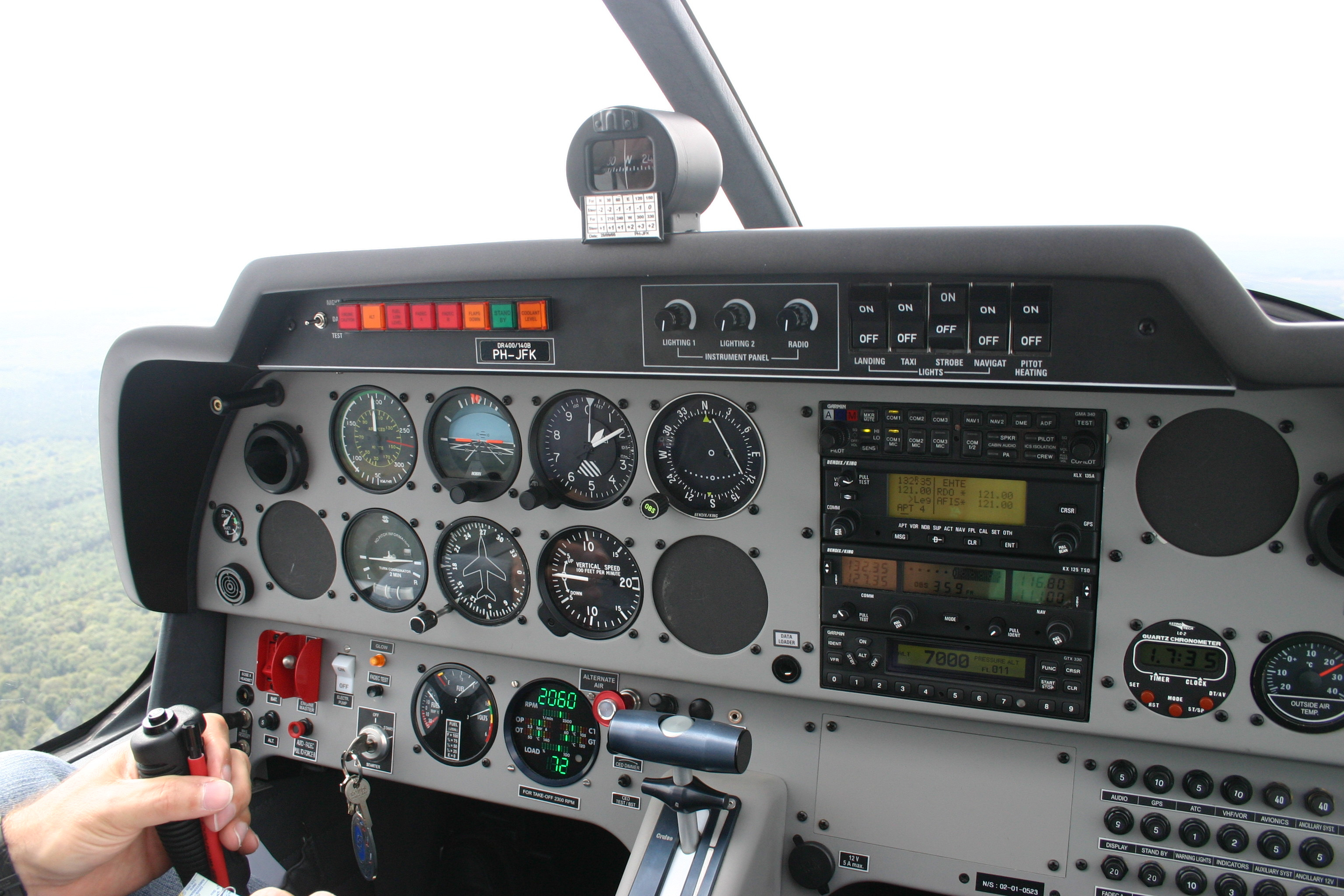
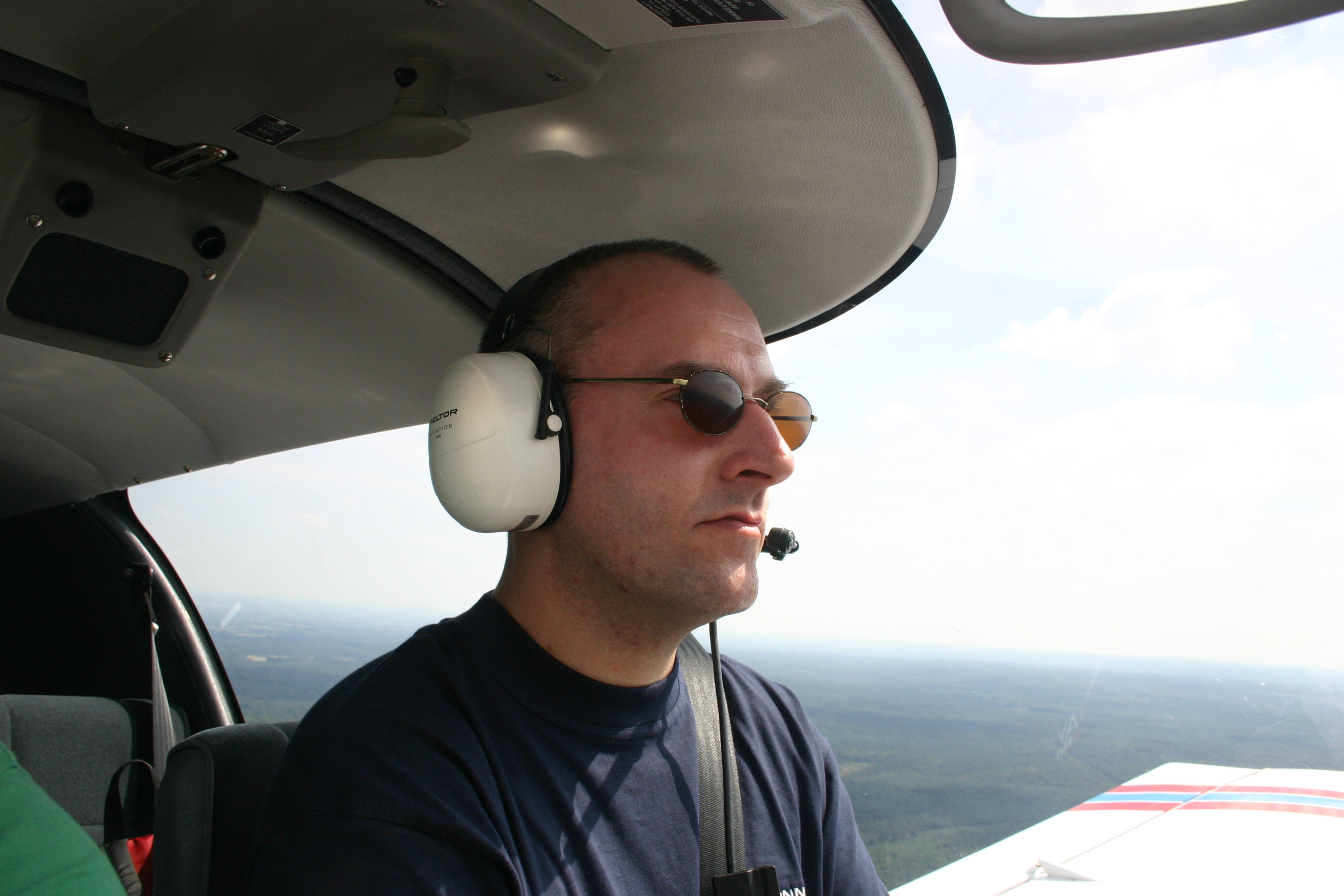
Bas initially didn’t like the idea of a plane made from wood. But when we looked at the Robin in more detail, he agreed that this could be a viable option.
At the end of the evening, we were all well fed and tired. We discussed and concluded a lot and ended with two important statements: we are going for it and let’s focus on trying to buy a Robin DR400.
Let the search begin.
Want to respond to this post?
Look me up on GitHub,
 Facebook or
 LinkedIn.
Tags
- 3D 9
- Air Safari 19
- Australia 67
- BlackBerry 1
- Blue Sky Flying Adventures 33
- By Boat 4
- By Bus 2
- Dev Containers 3
- Domoticz 2
- Driving 31
- Facebook 1
- Flying 39
- Gallery 2 7
- Google Maps 4
- Hugo 1
- Jekyll 4
- Linux 3
- NextGEN Gallery 5
- Owning a plane 3
- Podman 3
- Red Centre Tour 19
- Singapore 3
- Tasmania 10
- USA 33
- WSL 2 4
- Walking 42
- WordPress 17